Graded vs. Ungraded Hockey Cards: Which Is the Better Investment?
Hockey card collectors often ask the same question: should you invest in graded hockey cards or ungraded (raw) cards?
The truth is — both have their place in the hobby. It really comes down to your goals as a collector and investor.
As someone who has been buying and selling hockey cards for many years, I’ve seen strong advantages on both sides — especially when dealing with vintage legends and key rookie cards.
What Are Graded Hockey Cards?
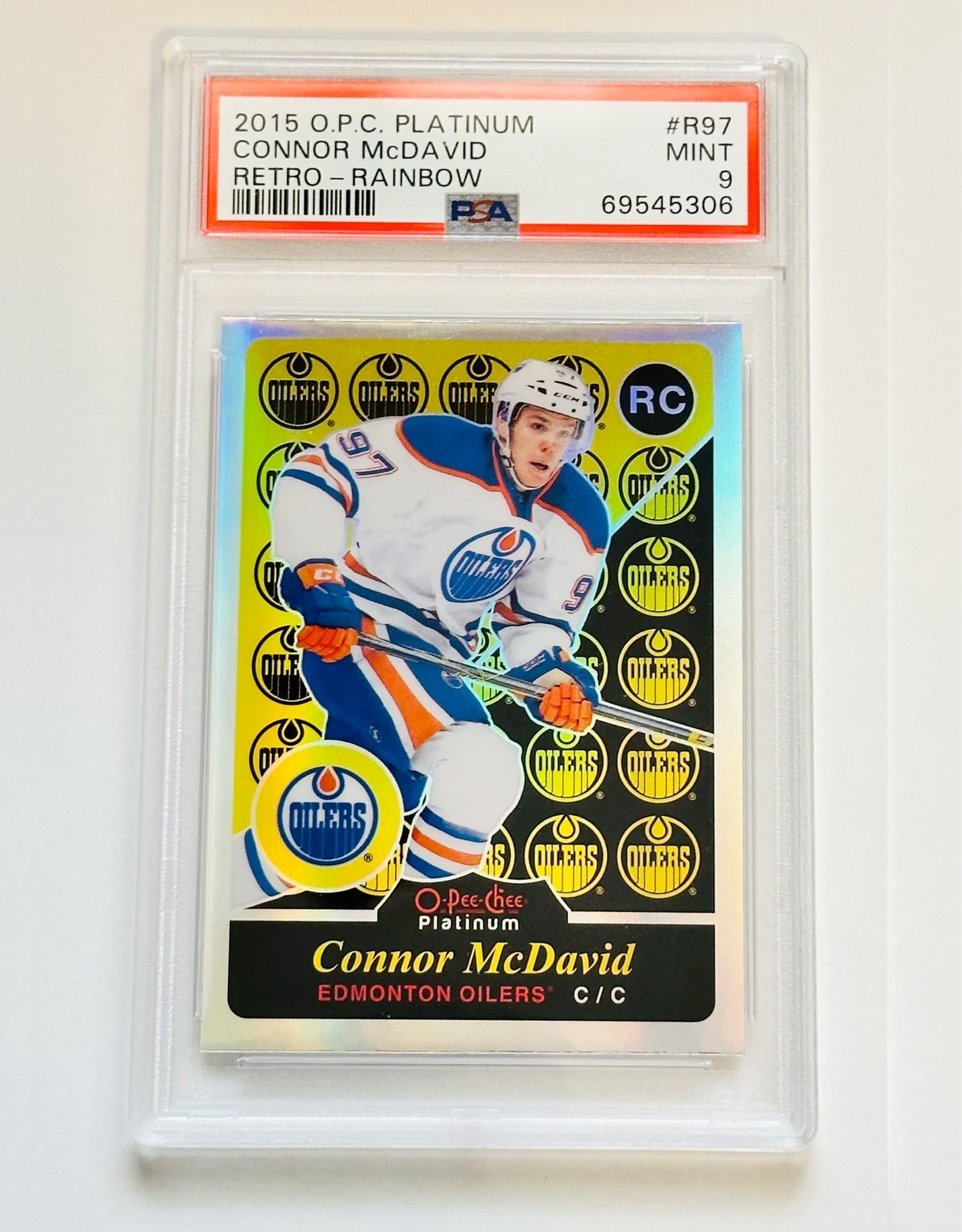
Graded hockey cards are professionally evaluated by authentication companies such as PSA, KSA, SGC, or Beckett. Each card is carefully inspected for:
-
Corners
-
Edges
-
Surface
-
Centering
The card is then assigned a numerical grade and sealed in a protective holder to preserve its condition.
High-grade examples — especially rookie cards and Hall of Fame players — can command significant premiums in today’s market.
Collectors and investors often seek graded cards featuring legends like Gordie Howe, Bobby Orr, Sidney Crosby, Connor McDavid, and Ray Bourque — players whose legacy and demand continue to drive long-term value.
Benefits of Graded Hockey Cards
There are several advantages to investing in graded hockey cards:
Authentication & Trust
Grading confirms the card is genuine and unaltered.
Condition Transparency
Buyers know exactly what they’re getting.
Higher Resale Value
High-grade rookie cards — such as Connor McDavid or Sidney Crosby — often sell for strong premiums.
Long-Term Protection
Encapsulation protects against wear, moisture, and handling damage.
For investors building a high-end portfolio, graded vintage cards — such as 1960s Parkhurst issues or early O-Pee-Chee releases — provide stability and historical significance.
What Are Ungraded (Raw) Hockey Cards?
Ungraded hockey cards are cards that have not yet been submitted for professional grading.
Many collectors love raw cards because they are:
-
More affordable upfront
-
Easier to acquire in bulk
-
Great candidates for future grading submissions
Finding a sharp raw rookie card and having it professionally graded can be one of the most rewarding strategies in the hobby.
Investment Strategy: Graded vs. Raw
So which is the better investment?
If your focus is long-term value, graded cards tend to provide more predictable returns — particularly for:
-
Rookie cards
-
Hall of Fame players
-
Low-population vintage issues
If your focus is opportunity and upside, raw cards can offer strong potential — especially if you can identify high-grade examples before submitting them for grading.
Many experienced collectors use a hybrid approach:
-
Hold key graded centerpieces
-
Buy raw cards for grading potential
-
Diversify across eras (vintage + modern)
Whether graded or ungraded, hockey cards remain one of the most exciting and historically rich segments of the sports card market — especially for Canadian collectors.
From vintage icons like Gordie Howe and Tim Horton to modern superstars like Connor McDavid and Sidney Crosby, graded hockey cards continue to prove themselves as both collectible treasures and long-term investments.
The key is always the same:
Buy quality.
Focus on legendary players.
Think long term.
And most importantly — enjoy the hobby.
Steven
fastballcollectibles.com